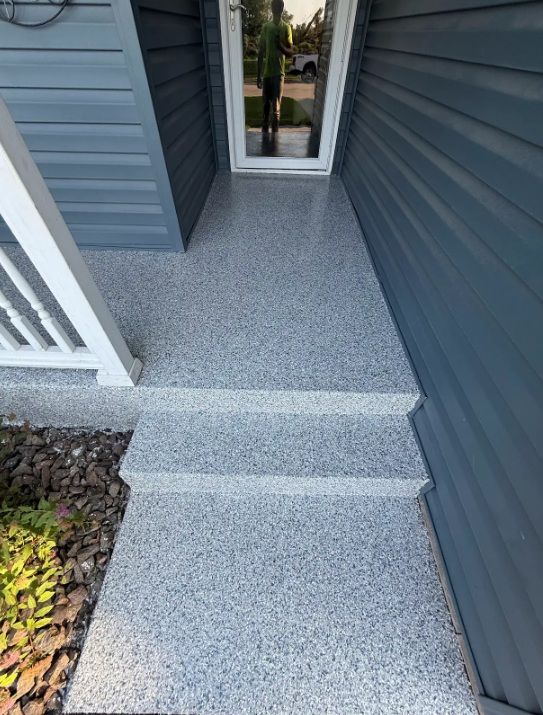
Should You Epoxy or Stain Your Garage Floor? Best Use Cases
The garage floor stain vs. epoxy comparison comes up regularly for Minnesota homeowners who want something better than bare concrete. Stain provides a decorative, penetrating color treatment; epoxy provides a bonded, protective layer. The right choice depends on how you use your garage, your climate conditions, and how long you expect the result to last. Ever Last Coating Specialties installs professional floor coatings across southwest and central Minnesota. We break down exactly where each option fits, and where one clearly wins.
If you've spent any time researching this question, you've probably found convincing arguments on both sides. Stain looks great in photos. Epoxy sounds durable. Neither description is wrong, but they're not the whole story. The gap between how each product is marketed and how it actually performs in a Willmar or Marshall garage is wider than most people expect.
What Garage Floor Stain Actually Does (and Doesn't Do)
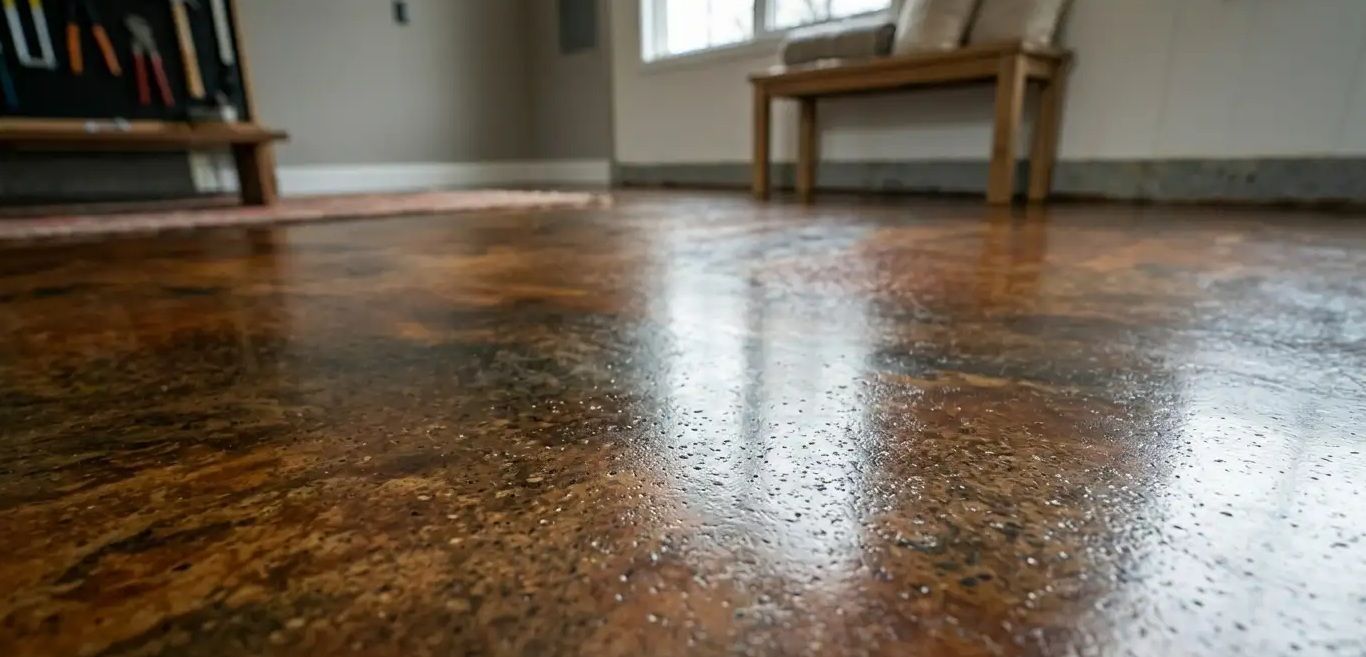
Concrete stain works by chemically reacting with or penetrating the surface of the concrete rather than sitting on top of it. Acid-based stains react with minerals in the slab to produce earthy, variegated tones. Water-based stains soak into the pores and deposit pigment. Either way, the color becomes part of the concrete. It won't peel off the way a surface film can.
That's the genuine appeal. But stain is a colorant, not a protectant. Without a sealer applied over it, stained concrete absorbs oil, salt residue, and moisture just like bare concrete. The sealer is doing the protective work, and most consumer-grade sealers aren't built for a garage floor that sees road salt tracked in on tires from November through March. Stained floors in working garages typically need resealing every few years to maintain any resistance to staining and moisture.
Where Epoxy Coatings Outperform Stain
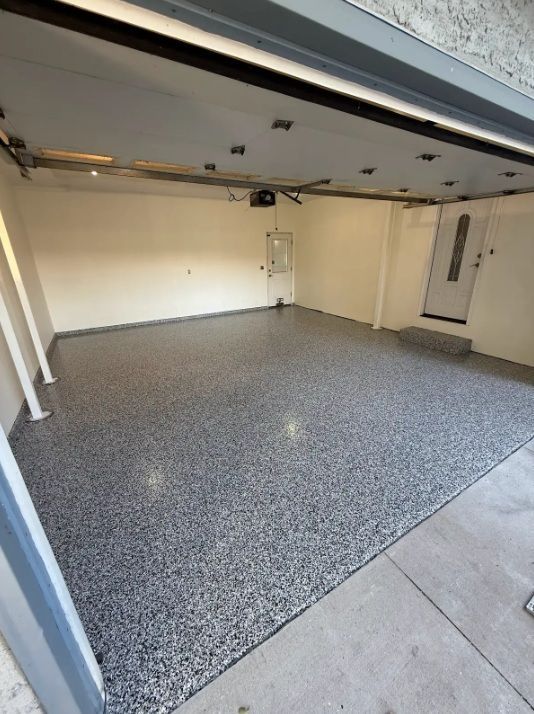
Epoxy and its higher-performance relatives (polyurea and polyaspartic coatings) bond to the concrete surface and form a protective layer on top of it. That layer resists oil, chemical spills, abrasion, and moisture in a way that a stain-plus-sealer combination simply can't match for a functional garage. It's the reason professional garage floor coatings are the go-to choice for Minnesota homeowners who actually use their garage space.
The difference shows up in a few specific areas:
- Chemical resistance: Epoxy-based coatings resist motor oil, antifreeze, and road salt without staining through. Stain with a basic sealer absorbs these over time.
- Abrasion resistance: Vehicle traffic, jack stands, and dropped tools wear through sealers faster than they wear through a properly applied coating system.
- Moisture blocking: A professional coating applied over diamond-ground concrete creates a barrier against moisture vapor moving up through the slab, a common problem in older Minnesota homes.
- Durability timeline: The Valence polyurea/polyaspartic system we install at Ever Last Coating Specialties is 4x stronger than traditional epoxy and is backed by a 15-year warranty against chipping, peeling, and delamination.
Stain is best suited for spaces that prioritize aesthetics over protection: showrooms, studios, finished basements with light foot traffic, or patios where the visual result matters more than heavy-duty performance.
The Minnesota Factor: Why Climate Makes the Call
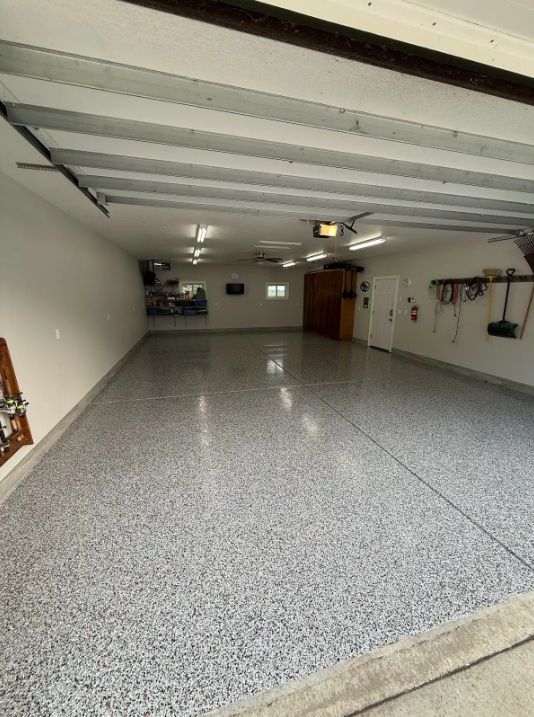
Southwest Minnesota garages take abuse that accelerates coating failures in ways warmer climates don't. Freeze-thaw cycles repeat dozens of times each winter. Concrete that expands and contracts under a rigid coating will eventually win that fight. Road salt migrates in on tires and boot soles from October onward, and it's corrosive to anything porous or inadequately sealed.
Standard epoxy (the kind in hardware store kits) is rigid. It doesn't flex with concrete movement. That rigidity, combined with temperatures that can shift drastically between a January night and a July afternoon, is why DIY epoxy jobs often show cracks and edge lifting faster than most homeowners expect.
Polyaspartic and polyurea systems are engineered with flexibility built in, which is why they hold up in climates like ours, where temperature cycling is constant.
For Minnesota homeowners who want a garage floor that handles salt, cold, and vehicle traffic without annual maintenance, stain isn’t the practical answer. A professionally installed coating system is.
Which Option Fits Your Garage?
For most working garages in this region, a professional coating system outperforms stain on every metric that matters. Stain is a genuine option when aesthetics are the primary goal and the space won't see heavy vehicle or chemical exposure.
If you're unsure which direction makes sense for your specific floor, the four-step installation process Ever Last Coating Specialties uses starts with an on-site assessment. Our team will look at your concrete's condition, check for moisture, and give you a straight answer about which system makes sense before any work is scheduled.
Frequently Asked Questions
Can you apply epoxy over a stained garage floor?
In most cases, applying an epoxy or polyaspartic coating over an existing stain requires grinding the surface first to ensure proper adhesion. If a sealer was applied over the stain, that layer must be removed before any new coating can bond correctly. Skipping surface prep is the most common reason coatings fail prematurely, regardless of coating type.
Does concrete stain hold up to road salt in a garage?
Concrete stain alone does not resist road salt well. The stain penetrates the surface but leaves the concrete porous unless a durable sealer is applied over it. Most residential-grade sealers degrade under repeated salt exposure and require reapplication every two to three years to maintain any protective value in a Minnesota garage environment.
How long does a polyaspartic garage floor coating last in Minnesota winters?
A professionally installed polyaspartic coating, applied over properly diamond-ground concrete, is designed to handle Minnesota's freeze-thaw cycles without cracking or delaminating. Ever Last Coating Specialties backs its Valence polyurea/polyaspartic system with a 15-year warranty against chipping, peeling, and delamination, a coverage period that reflects how these systems actually perform in this climate.
Stop Guessing and Get It Done Right
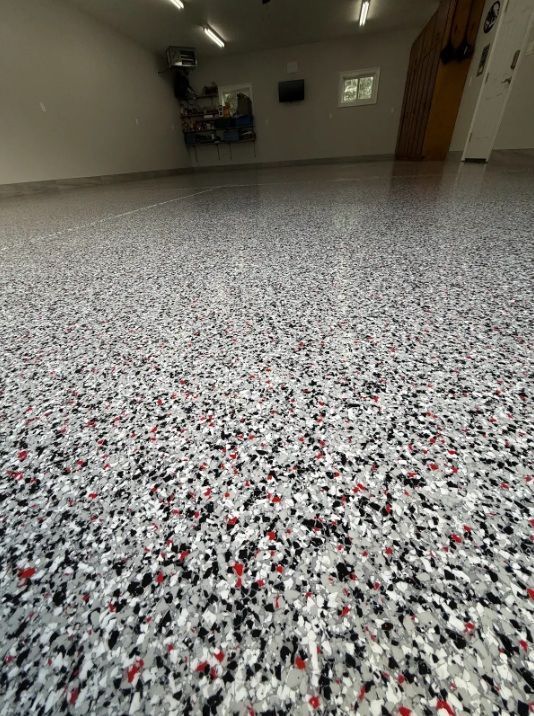
The stain vs epoxy debate matters less once you know what your garage actually deals with each winter. For most southwest and central Minnesota homeowners, a professional polyaspartic coating is the clear-cut choice: more durable, lower maintenance, and built for the conditions your floor faces every year.
Request your free on-site estimate. Mason or Jason will assess your floor, walk you through your options, and give you a straight answer. No pressure, no guesswork.
Recent Posts